
-
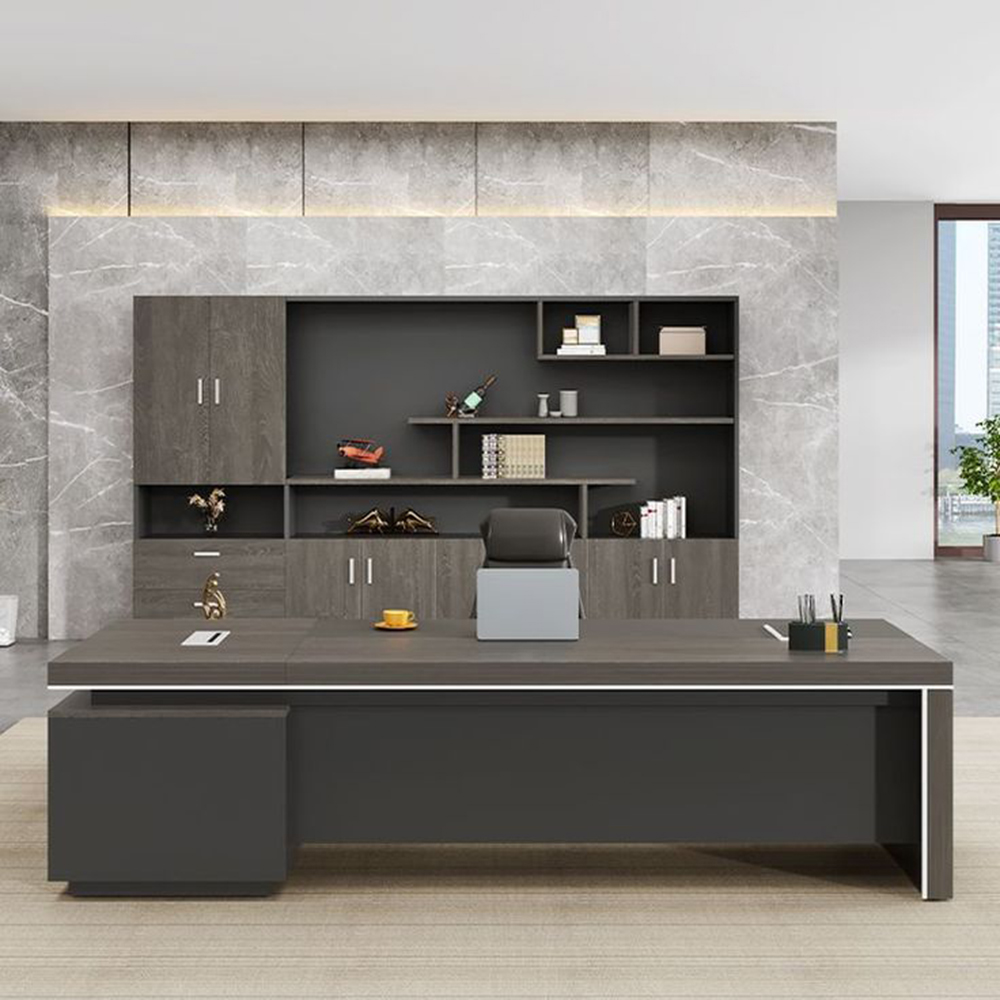
Primary Colors: Deep charcoal grey, a muted grey-brown or taupe wood grain, and various shades of stone grey.
-
Accent Colors: A sharp, clean white line provides a crisp accent on the desk. Metallic silver/brushed steel appears in the hardware. A single pop of bright yellow (the cup) serves as a deliberate focal point.
-
Materials:
-
Wood Grain Laminate/Veneer: A dark, straight-grained wood laminate with a greyish-taupe hue is used for the desktop and credenza doors, adding a touch of organic texture.
-
Matte Solid Surfaces: The desk’s modesty panel and side pedestal are finished in a solid, matte charcoal grey, providing a smooth, non-reflective counterpoint to the wood grain.
-
Large-Format Porcelain/Stone Tile: The feature wall behind the credenza is clad in large-format tiles that mimic a sophisticated grey marble (like Pietra Grey or a similar natural stone), complete with subtle white veining.
-
Metal: The long, minimalist cabinet pulls are made of brushed stainless steel or aluminum.
-
Carpet/Rug: The furniture sits on a large, low-pile area rug in a light beige or cream color. This light-colored base provides a crucial contrast, preventing the dark furniture from feeling overwhelmingly heavy and helping to define the workspace.
-
-
The Executive Desk:
-
Design: A large, imposing L-shaped desk with a strong, rectilinear form. Its clean, sharp angles project confidence.
-
Features: A standout detail is the thin, continuous white or metallic inlay that traces the perimeter of the desktop and extends down the waterfall leg. This simple line adds a touch of high-tech precision and visually frames the desk. The combination of the wood grain top and the solid charcoal return creates a subtle, two-tone effect.
-
-
The Wall Unit / Credenza:
-
Design: A custom, full-wall credenza that perfectly complements the desk. Its design is a masterful exercise in asymmetrical balance.
-
Composition: It features a dynamic arrangement of closed cabinets with wood grain doors, open shelving, and a large central niche. The back panels of the open sections are finished in the same solid charcoal grey as the desk, creating a sense of visual continuity and depth. The “floating” shelves add to the modern aesthetic.
-
-
The Office Chair:
-
Style: A mid-back ergonomic office chair upholstered in what appears to be black or dark charcoal leather. Its design is functional and modern, supporting the user without visually competing with the powerful desk and credenza.
-
-
Feature Lighting: The primary light source is a recessed LED strip housed within a ceiling soffit or bulkhead positioned directly above the credenza.
-
Effect: This creates a “wall grazing” effect, where light washes down the face of the stone-tiled wall. This technique is highly effective at accentuating the texture and veining of the tiles, adding drama and turning the wall into a major design feature.
-
Ambient/Task Lighting: There is no visible integrated lighting on the furniture itself. The room relies on the architectural downlighting and likely other ambient ceiling lights (not pictured) for general illumination.
-
Feature Wall: The grey, marble-look tiled wall acts as a sophisticated and textured anchor for the entire room.
-
Minimalist Hardware: The sleek, long metal pulls on the cabinets contribute to the clean, uncluttered aesthetic.
-
Curated Decor: Accessories are used sparingly to maintain the minimalist feel. Items include a small abstract gold sculpture, a model airplane, and neatly stacked books, adding a personal touch without creating clutter.
-
Monochromatic Layering: Use different shades and textures of a single color (like grey) to build a sophisticated and deep composition.
-
Geometric Purity: Rely on strong, clean, rectilinear forms for furniture to convey stability and modernity.
-
The Power of Contrast: Use a light-colored rug to ground dark furniture. Employ a sharp, contrasting detail like the white inlay on the desk to add precision and visual interest.
-
Architectural Lighting: Use lighting not just to illuminate, but to actively shape the space and highlight key materials and textures, like the wall-grazing effect on the stone wall.
-
Balanced Asymmetry: In shelving and storage units, an asymmetrical layout can be more visually dynamic and modern than a perfectly symmetrical one.
1. Overall Concept & Style
The design ethos is grounded in modern minimalism, but with a distinctly corporate and masculine edge. It eschews overt ornamentation in favor of bold forms and the inherent beauty of its materials. The result is a space that feels both grounded and commanding, projecting an image of strength and clarity.
2. Color Palette & Materials
The palette is a sophisticated study in monochrome, using various shades and textures of grey to create depth and interest.
3. Key Furniture & Fixtures
4. Lighting Design
The lighting strategy is focused and architectural:
5. Architectural & Decorative Elements
Summary for Interior Designers
This design demonstrates how to create a powerful corporate space using a limited palette. Key principles to apply are:
Related Products



Reviews
There are no reviews yet.